

How To Draw An Apple With Shading
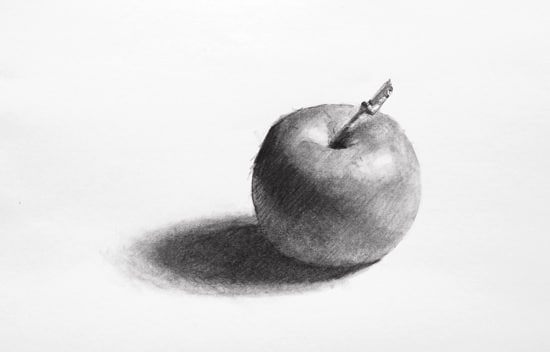
In this light and shadow series, nosotros expect at the theory, drawing and painting of a simple form focusing on shadow, light and edges.
in Part ane, nosotros looked at the theory of light and shadow.
This week we're going to put pencil to paper and see how the theory works in a uncomplicated pencil drawing of an apple tree…
Understanding your light source
The different characteristics of the lite hit an object tin can completely alter its appearance.
For this sit-in, I've created a lighting set upward using one single light source which gives united states a predictable autumn of light.
This set up demonstrates each distinct surface area to be enlightened of, exaggerating the widest tonal range, and when you lot're a beginner, information technology's the simplest way to see the difference betwixt the tones.
My lamp has a diffuser on it chosen a Softbox.
The Softbox gives u.s.a. the fall of light we're after, even so slightly softer edges on the shadows.
Why?
One of the fundamental lessons from this sit-in I want you to come away with is to understand the importance of soft edges in your drawings.
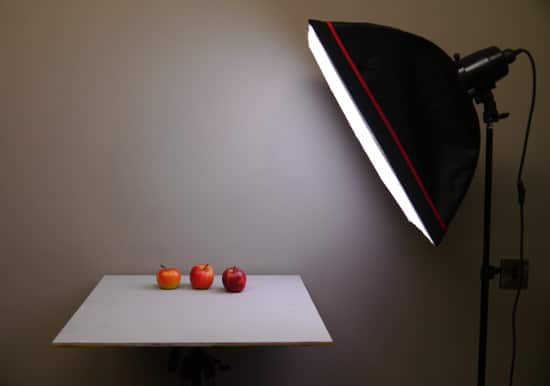
Softbox single source lighting gear up in my studio
The importance of hard & soft edges
An edge is where ii objects or two surfaces meet together.
The term a 'hard edge' can describe two very hard surfaces, such as a tabletop with a metal cube on top of it or most commonly in drawing, we talk about the hard edge existence an surface area that has a sharpness to it or a focal indicate of the picture.
So, information technology could exist a crisp line to indicate changes in shape or angularity.
Or it could exist an expanse of high contrast (light and night) to describe the viewer'southward attending.
A 'soft edge' is more flowing or fluid and tends to be more depression in contrast. Soft edges suggest the thought of roundness and a gradual transition.
In photography, lighting can frequently be chosen hard calorie-free or soft low-cal. Hard lite is harsh light so creates sharp shadows and harder edges.
Soft light is very diffused, creating softer shadows and softer edges. Then if you wanted to photograph somebody in the virtually flattering low-cal, you would have soft light. If yous want to increase the dramatic quality of the scene, you would use hard light.
This one piece of information that can drastically alter your drawings and paintings.
And so as we go through the adjacent demo, I'll indicate the areas to keep soft and the areas to go on sharper.
Ane of the biggest mistakes beginners make in drawing, is keeping all of the edges the same – well-nigh commonly, all of the edges are kept sharp and crisp.
If you tin can learn to alter the weight of line and to incorporate more soft edges in your drawings, it will make a massive difference to the realism and fashion of your work.
Shadow edge
Below are two photographs to illustrate the subtle differences in the shadow strengths when I altered the lighting slightly.
The offset one used direct sunlight because it'due south non diffused; it has created a harder, more than solid shadow line and cast shadow.
Also, come across how y'all can guess the bending of the sun via the length of the cast shadow and the bright highlight.
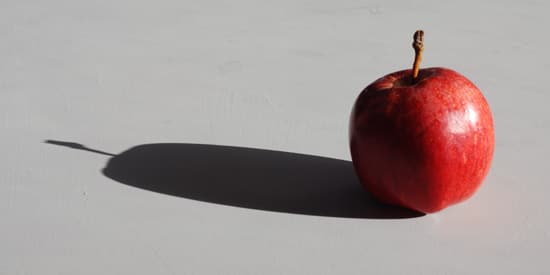
Low angle, hard lighting from straight sunlight.
The 2nd ane used a slightly higher lighting position with a softer lite creating a softer cast shadow edge.
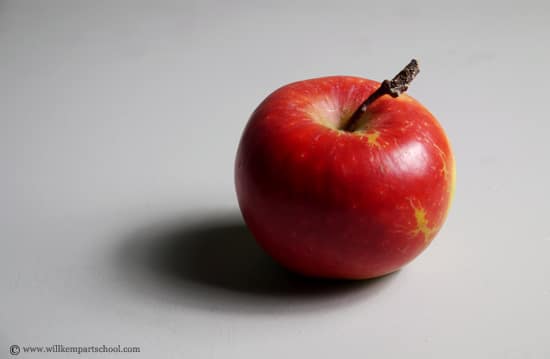
Loftier, softer diffused lighting from a single calorie-free source Softbox
The image above is the final reference epitome I'll use for this sit-in.
It tin be 'right clicked' and 'Save image as', so yous can employ information technology as a reference for your drawing.
Habitation setup
A small table lamp without a shade is a practiced selection for setting up your still life at domicile, if you want to work from life, rather than the photograph in a higher place.
An opaque bulb will requite you a calorie-free source in between the ii examples above. O.k – you won't have a diffuser to mimic a Softbox – but it won't exist as hard equally direct sunlight either.
Simplifying your drawings by mapping the shadows
Before nosotros become started on the principal event, here's a really quick fashion of practising looking for the shadow line.
Don't underestimate its importance because of its simplicity.
It'south often the first sketch that is the about effective at conveying the sense of form rather than an overworked, detailed cartoon.
Nonetheless, working with pencil, subtleties can go added into the scene (that are there) too early, and the uncomplicated distinction between light and dark gets lost.
During this practise, you lot have to make a clear distinction between low-cal and dark because you are using a pen – helping to prevent the separation from becoming muddled.
Pro tip: Working with a permanent marker pen is the best method I've constitute for practising this technique. Information technology forces you to brand a clean determination in your mind before committing pen to newspaper.
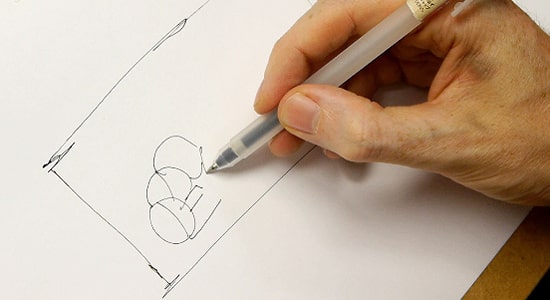
This sketch is based on the Cézanne painting from last calendar week. I'm using a blackness, fine line gel pen. This 1 is 0.5 mm from Muji.
I sketch out the outline of the object then put in both the cast shadow and the shadow line.
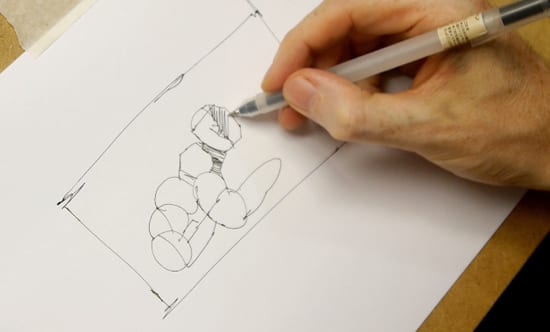
I can so indicate the shadow side by hatching lines with the pen.
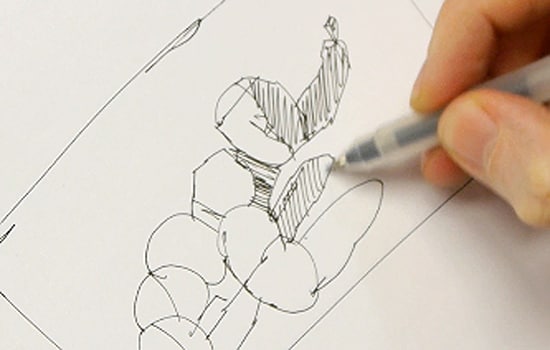
I'm keeping the lines evenly spaced and changing the direction of them, depending on the direction of the grade. Notice how all of the cast shadows on the tabular array are hatched in the same direction.
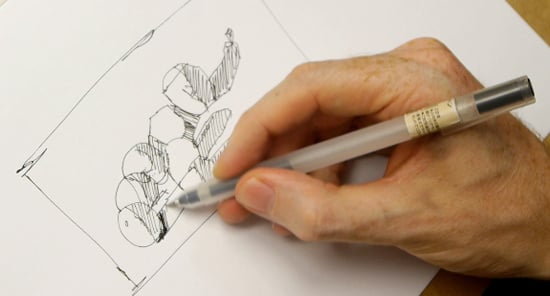
I and then draw in whatsoever darker accents on the lesser of the objects.
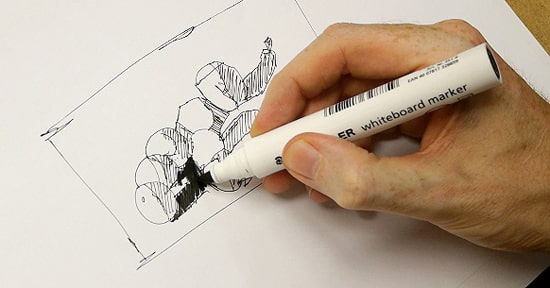
And once I'1000 confident with the full general shapes and shadow patterns, I work with a thicker pen (this is a Staedler whiteboard marking) to indicate the very darkest cast shadows within the drawing.
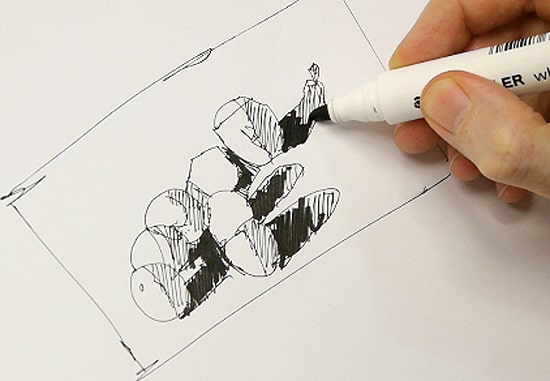
So now I have iii tones, the lights, the form shadows and the cast shadows.
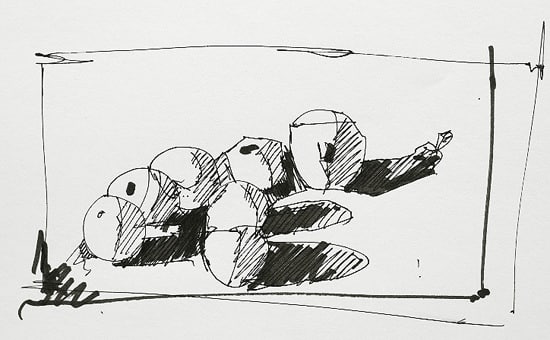
This has merely given me a really good thought of the shadow patterns within the scene. Information technology can be a great practice to practise if you're out in bright sunlight as you tin can become distinct shadow shapes.
So now your optics are tuned in, let'southward get on with the course drawing using a pencil.
How to depict a 3-dimensional Apple
Materials you will need:
- White paper, either regular computer paper or cartridge newspaper
- 2B & 6B pencil – I use Staedtler Mars Lumograph
- Eraser – I use a putty eraser
- A circular object to describe effectually (approx 7cm wide)
- A tortillion – I utilise a paper stump, which is very similar to compressed paper.
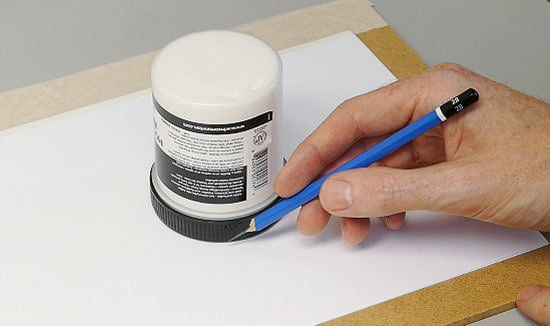
Find a circular object to draw lightly around; this helps to requite you lot a starting betoken so we can quickly put into practice the theory of the sphere from final week. I'chiliad using to 2B pencil (Staedtler Mars Lumograph)
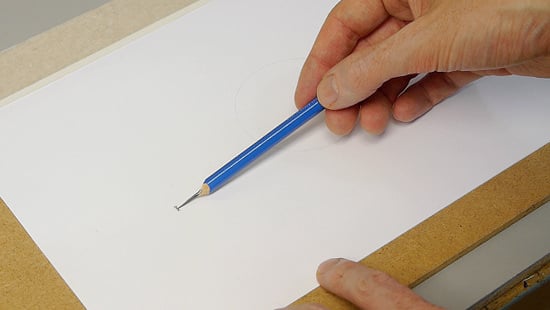
I then make a marking indicating the furthest indicate of the cast shadow.
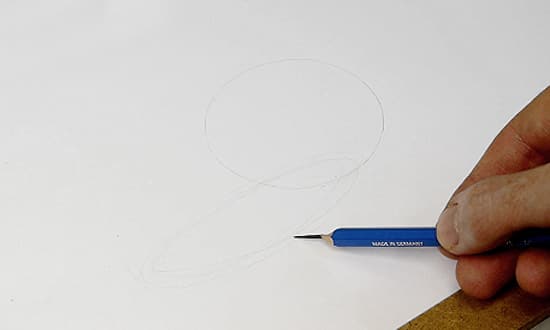
Lightly depict an ellipse shape to indicate the cast shadow. Find how the ellipse cuts through the shape of the circle.
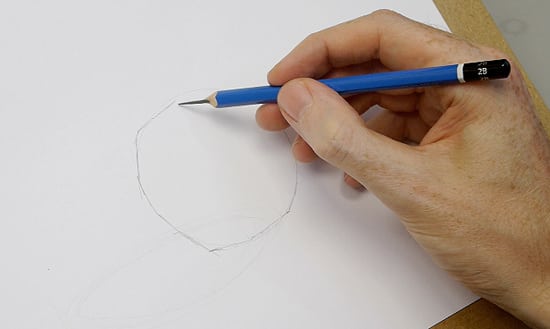
I now use a hard line and add slight angles to the circumvolve, to correspond more accurately the shape of the apple.
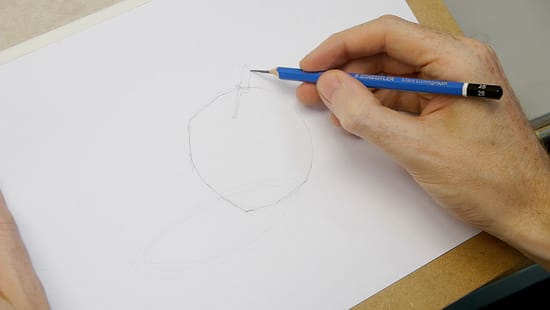
Lightly describe in the shape of the stalk.
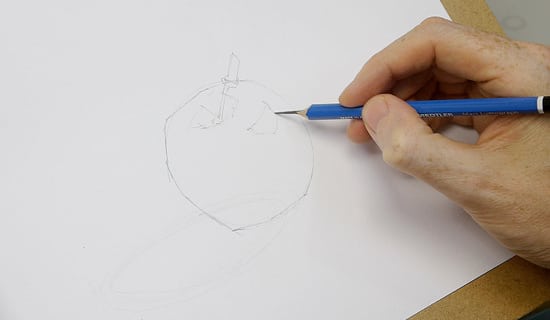
And and then the shape of the highlight.
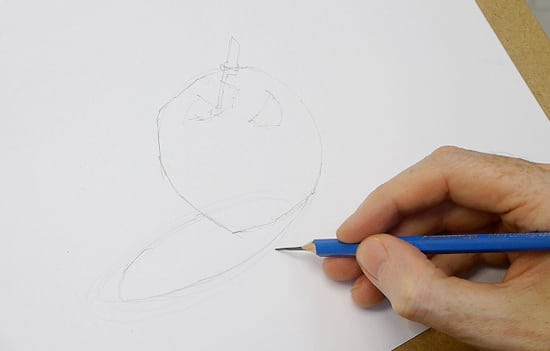
Reinforce the cast shadow shape noticing – the darkest function that sits straight under the apple, the mid-tone that makes upwardly the majority of the cast shadow shape while keeping a lighter line every bit y'all go towards the brightest, softest tail of the cast shadow.
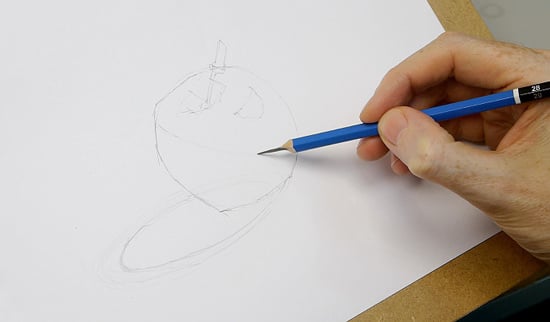
Lightly draw the shadow line; it has a slight curve to it.
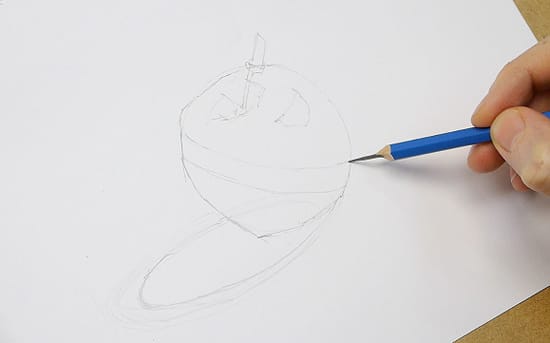
The curved line below the shadow line indicates a band where the course shadow cadre falls within. This volition be the darkest expanse of the apple.
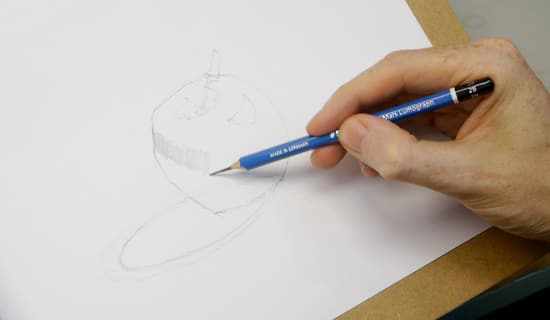
I then shade a mid-tone forth this course shadow cadre. Even though information technology'due south going to exist darker than this eventually, information technology will help yous to gauge the different tones within the drawing.
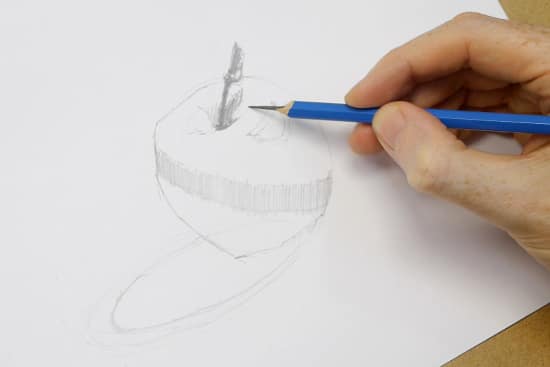
Shade the apple tree stem every bit dark as you lot tin get information technology, information technology's practically blackness on the reference image and it doesn't need to blend into whatsoever other tones – then nosotros can afford to become as dark as possible.
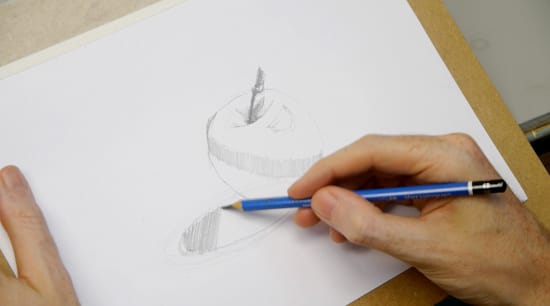
Now I bandy to a softer pencil (a 6B) and begin to shade in the bulk of the cast shadow. Notice how the angle of the shading is the aforementioned as when I hatched the cast shadow in the shadow mapping cartoon using a pen.
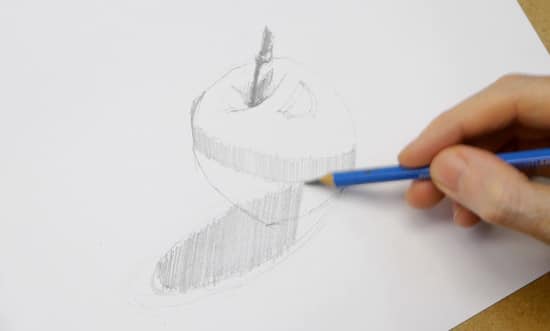
Go on the shade over the edge of the apple, and this is called combining the shadow shapes.
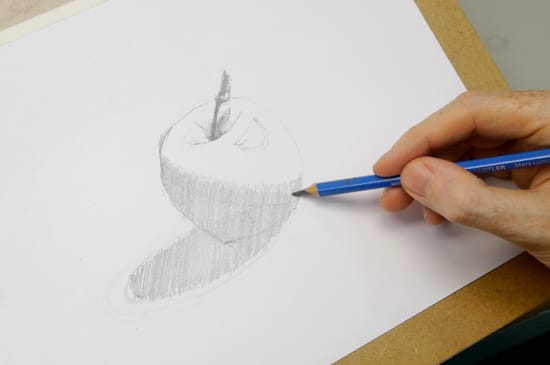
I fill in the form shadow, working over the commencement, form shadow core band.
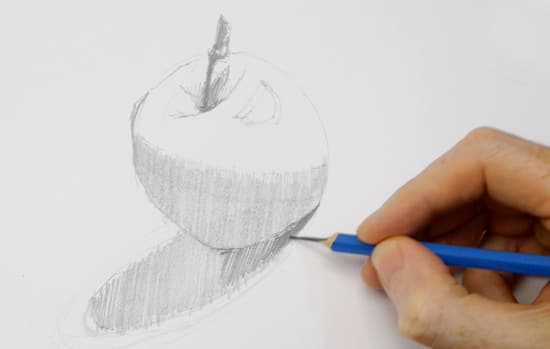
It's at this signal I bandy back to the 2B and depict the hard, sharp line at the base of operations of the bandage shadow.
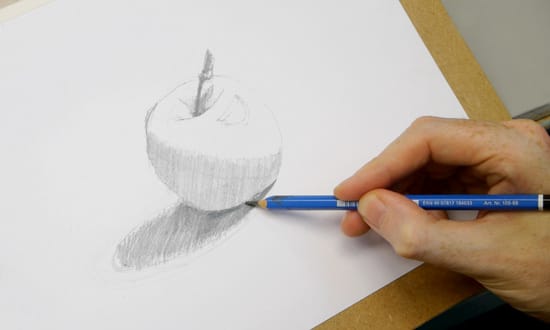
Using the softer 6B pencil, I reinforce the cast shadow depth of tone.
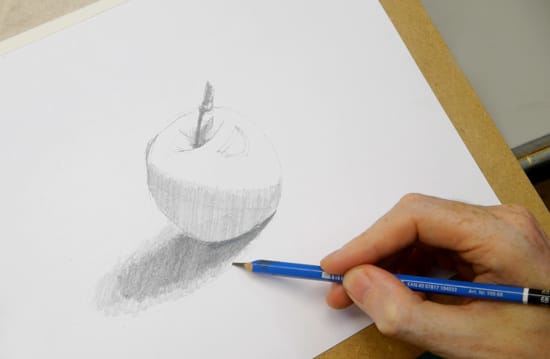
Belongings the pencil lightly, I gently betoken the softer, lighter tail of the bandage shadow.
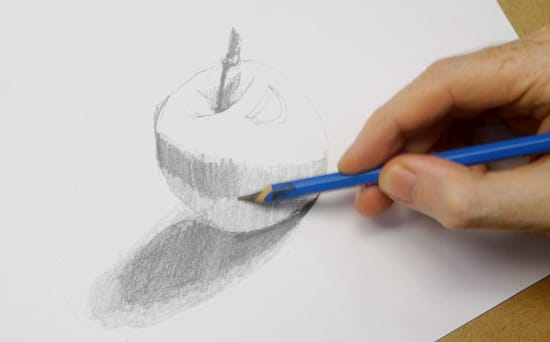
Now I feel confident to go heavier on the grade shadow core every bit I take both the dark cast shadow and the dark stalk to approximate against.
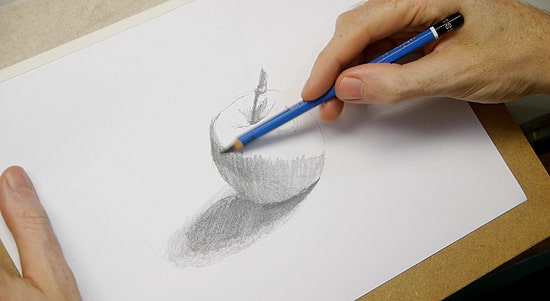
Irresolute hand position, I can follow the shape of the form.
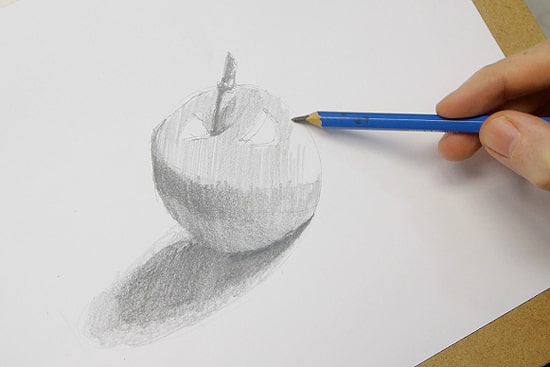
Lightly work across the whole of the low-cal side to indicate the halftone.
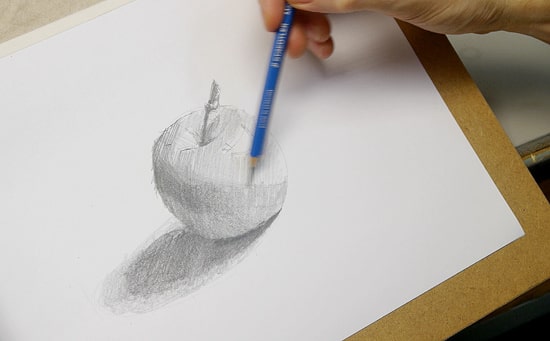
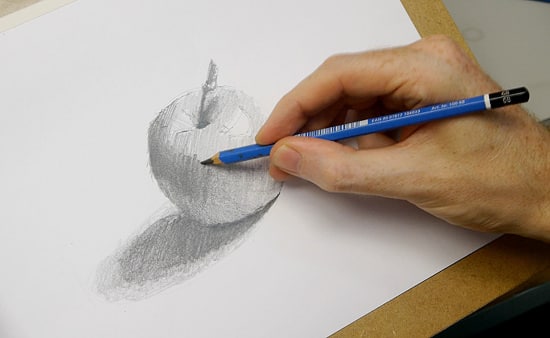
At present we take established all the elements.
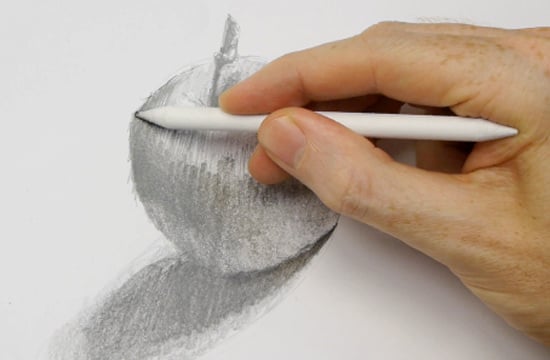
Using our secret weapon, our paper stump I outset to blend the tones to achieve the soft transition betwixt the low-cal side and the shadow side.

Discover how when yous shade with the paper stump, information technology slightly darkens the tone.
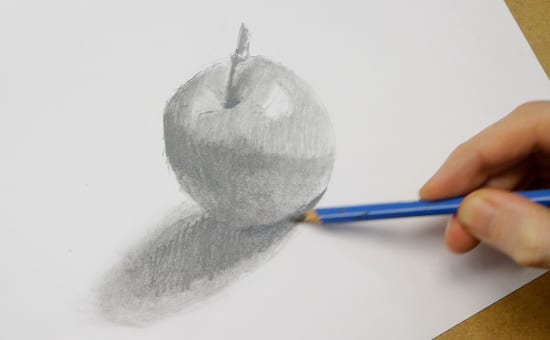
I continue to work between softening and sharpening and blending.
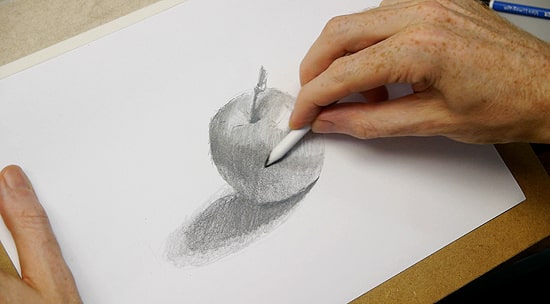

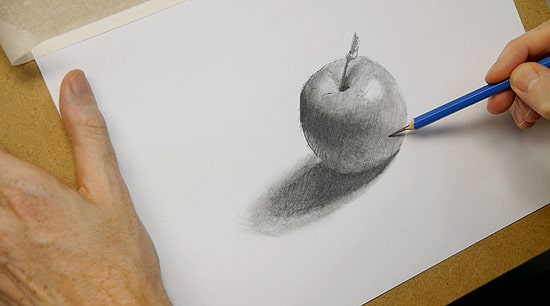
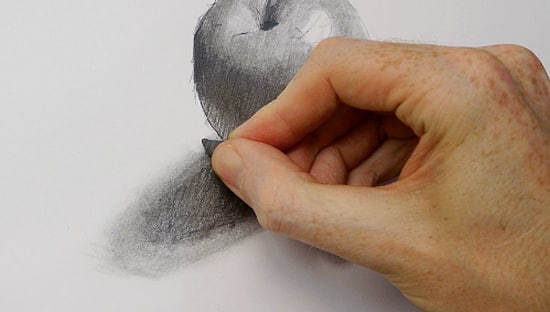
Using a putty eraser, I have dorsum whatever of the shapes that have gone slightly out.
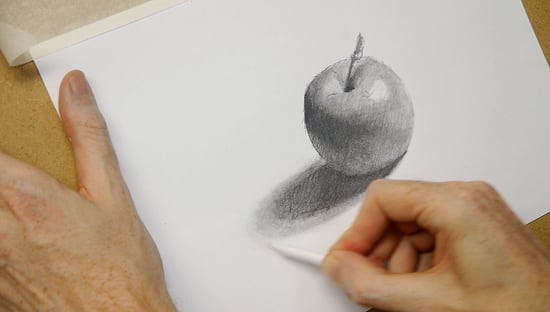
Soften out the tail of the cast shadow.
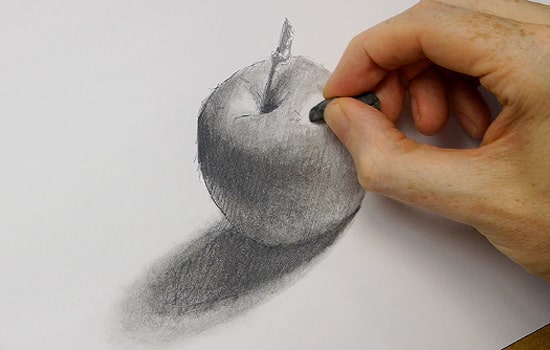
Pull back the highlight on the light side of the apple.
The finished drawing.
Whether you download and utilize the reference image or prepare your study, have it a step at a time, look out for the soft transitions, and I hope you become some fantastic results!
Adjacent time we'll be back in the studio where we'll develop this apple study into a simple gimmicky painting.
If y'all'd like to acquire more than about sfumato and drawing techniques, y'all should take a look at the How to draw light & shadow online cartoon course
You might also like:
1. A Beginners Guide to Calorie-free & Shadow: Part 1
two. A Beginners Guide to Light & Shadow: Part iii

Source: https://willkempartschool.com/how-to-shade-a-drawing-light-shadow-part-2/
Posted by: wilsonsirtho.blogspot.com
0 Response to "How To Draw An Apple With Shading"
Post a Comment